Sushi is more than just raw fish and rice—it’s an art form deeply rooted in Japanese tradition. While the quality of the fish and the skill of the chef are crucial, the accompaniments—wasabi, soy sauce, and pickled ginger—play an equally important role in enhancing the sushi experience.
In this blog post, we’ll explore the significance of these three key elements and how they contribute to the rich culture of sushi.
1. Wasabi: The Fiery Green Paste
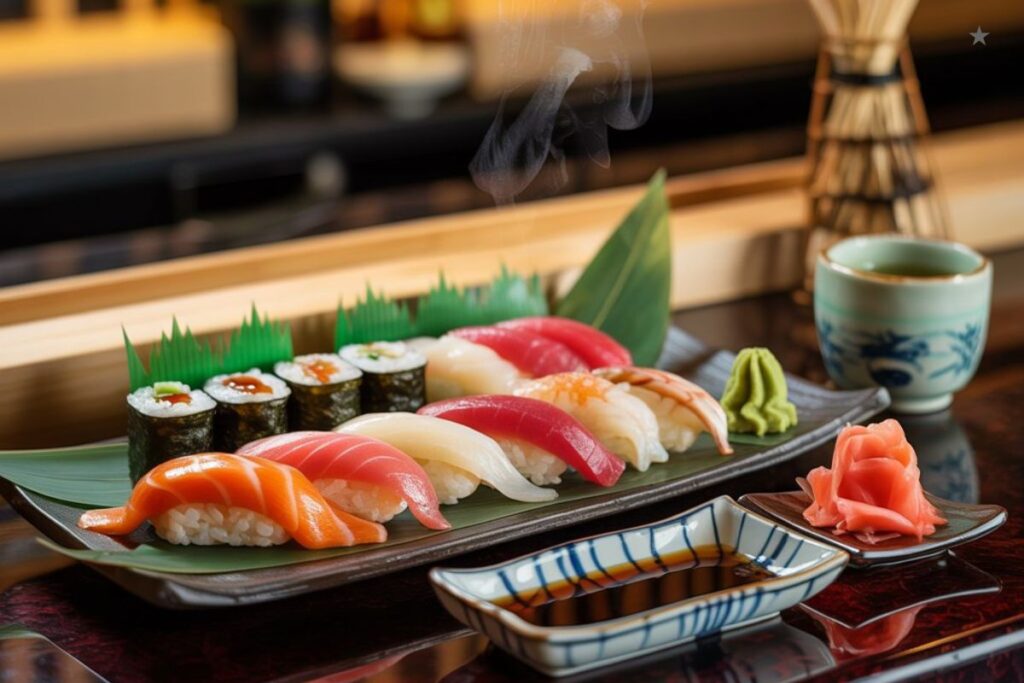
What is Wasabi?
Wasabi is a pungent, green-colored paste made from the grated root of the Wasabia japonica plant. Authentic wasabi is rare and expensive, so many restaurants substitute it with a mixture of horseradish, mustard, and food coloring.
Why is Wasabi Served with Sushi?
-
Antimicrobial Properties: Traditionally, wasabi was used to kill bacteria in raw fish, ensuring safety before modern refrigeration.
-
Flavor Enhancement: Its sharp, spicy kick cuts through the richness of fatty fish like salmon and tuna, cleansing the palate between bites.
-
Customary Placement: In high-end sushi bars, chefs often place a small amount of wasabi between the fish and rice, eliminating the need for extra dipping. This applies across the different type of sushi, where wasabi plays a key role in elevating the flavor.
How to Use Wasabi Properly
-
Avoid mixing too much wasabi into soy sauce—this is considered disrespectful to the chef’s intended flavor balance.
-
If you prefer extra heat, dab a small amount directly onto the sushi piece.
2. Soy Sauce: The Umami Booster

The Role of Soy Sauce in Sushi
Soy sauce (shoyu) is a fermented condiment made from soybeans, wheat, salt, and koji mold. It adds a salty, umami depth to sushi.
Proper Soy Sauce Etiquette
* Dip Fish-Side Down: For nigiri, lightly dip the fish (not the rice) into soy sauce to avoid overpowering the delicate flavors.
* Don’t Drown the Sushi: A small dip is enough—excess soy sauce masks the taste and makes the rice fall apart.
* Use the Provided Dish: Pour a small amount into the dipping dish rather than soaking the sushi in a pool of soy sauce.
Varieties of Soy Sauce
* Koikuchi (Dark): The most common type, balanced in saltiness and sweetness.
* Usukuchi (Light): Saltier and lighter in color, often used in cooking.
* Tamari: Wheat-free, thicker, and richer, ideal for gluten-sensitive diners.
3. Pickled Ginger: The Palate Cleanser
What is Pickled Ginger?
Known as gari, pickled ginger is thinly sliced young ginger marinated in sweet vinegar. Its pale pink color comes from the natural pigments in young ginger or added food coloring.
Why is Ginger Served with Sushi?

* Resets the Taste Buds: Eating a small piece between different types of sushi cleanses the palate, allowing you to fully appreciate each new flavor.
* Digestive Aid: Ginger helps with digestion, which is useful when consuming raw fish.
How to Eat Pickled Ginger Correctly
* Between Bites, Not On Top: Place a small piece on your tongue after finishing one type of sushi before moving to the next.
* Don’t Mix with Soy Sauce: Unlike wasabi, ginger should never be dipped in soy sauce—it’s meant to be enjoyed on its own.
Conclusion: Harmony in Every Bite
Wasabi, soy sauce, and pickled ginger are not just condiments—they are essential components that elevate the sushi experience. Each has a specific purpose, from enhancing flavor to ensuring food safety and refreshing the palate. Whether you’re dining at a high-end restaurant or exploring a sushi conveyor belt near me, these traditional accompaniments add richness and authenticity to every bite.
Next time you enjoy sushi, pay attention to how these elements interact with your meal. By using them mindfully, you’ll not only respect tradition but also unlock a deeper appreciation for the art of sushi.
Do you have a favorite way to enjoy wasabi, soy sauce, or pickled ginger? Share your thoughts in the comments below!
