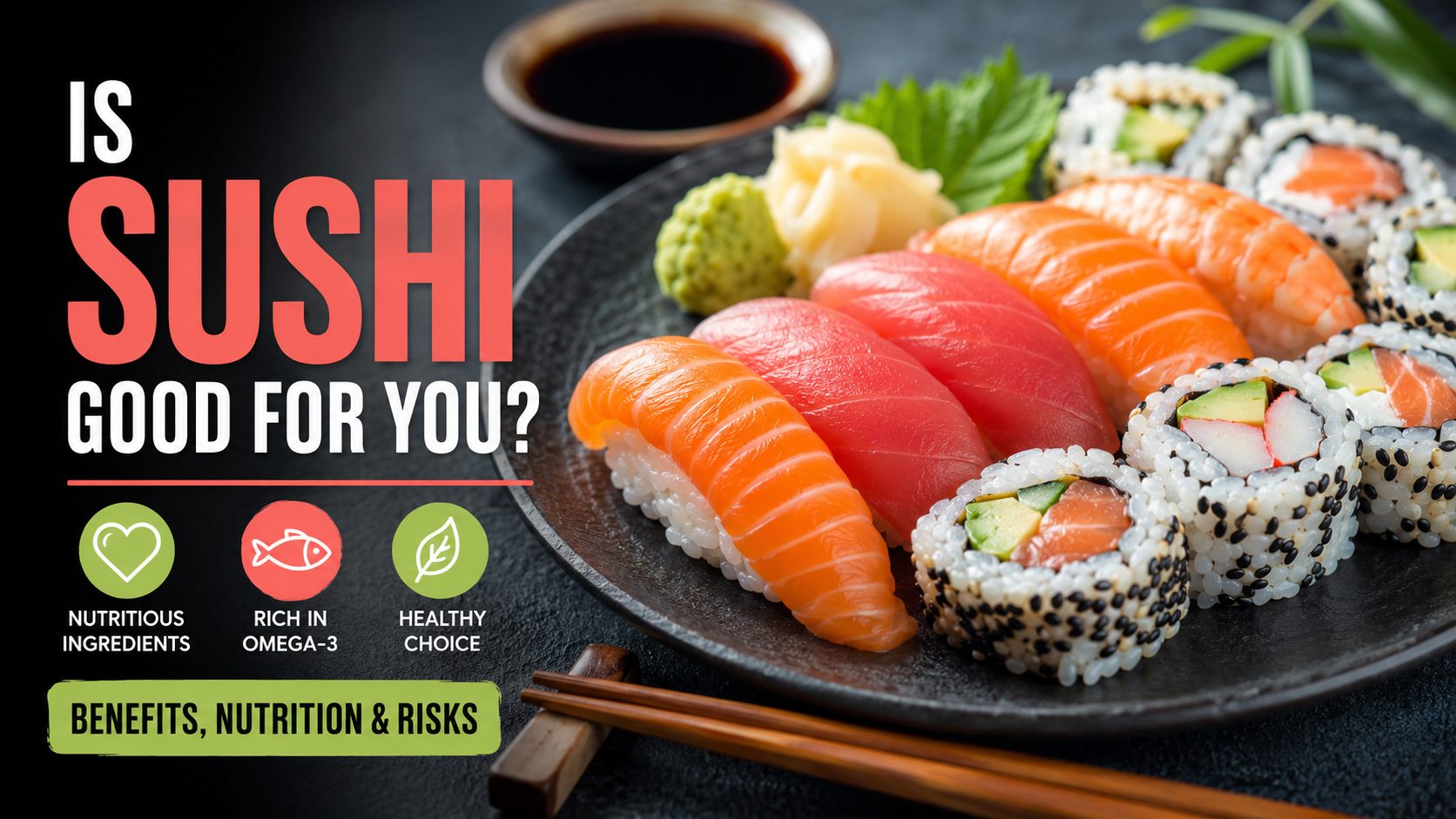
Sushi has become one of the most popular dishes worldwide, loved for its fresh flavors, artistic presentation, and variety of ingredients. Whether you’re enjoying classic tuna nigiri, salmon sashimi, or a colorful California roll, many people wonder: is sushi good for you?
The answer is generally yes—but it depends on the type of sushi you choose and how often you eat it. Traditional sushi made with fresh fish, vegetables, seaweed, and moderate portions of rice can be a nutritious meal packed with protein, healthy fats, vitamins, and minerals. However, some sushi rolls are high in calories, sodium, sugar, and unhealthy fats due to sauces, fried ingredients, and excessive rice.
In this guide, we’ll break down the nutritional value of sushi, explore its health benefits, discuss potential risks, and provide practical tips for making healthier sushi choices.
What Is Sushi?
Many people think sushi simply means raw fish, but that’s a common misconception.
Sushi is actually a Japanese dish made with vinegared rice, often paired with ingredients such as:
- Fresh fish
- Cooked seafood
- Vegetables
- Seaweed (nori)
- Egg
- Tofu
Raw fish is common in some varieties, but not all sushi contains raw seafood.
Popular types include:
- Nigiri
- Maki rolls
- Temaki (hand rolls)
- Uramaki (inside-out rolls)
- Sashimi (not technically sushi because it contains no rice)
Is Sushi Good for You?
Yes, is sushi good for you? In many cases, absolutely.
Traditional sushi offers a balanced combination of:
- Lean protein
- Heart-healthy omega-3 fatty acids
- Complex carbohydrates
- Vitamins and minerals
- Low saturated fat
However, nutritional quality varies significantly depending on ingredients and preparation methods.
Sushi Nutrition Facts
A typical serving of sushi may include:
- Nutrient Approximate Amount
- Calories 250–500
- Protein 15–30g
- Carbohydrates 30–60g
- Fat 5–20g
- Fiber 2–5g
- Sodium 500–1200mg
Nutrition depends on:
- Type of fish
- Amount of rice
- Sauces
- Fried ingredients
- Portion size
Rolls with tempura shrimp, spicy mayonnaise, or cream cheese are much higher in calories than traditional nigiri or sashimi.
Similar link: Conveyor Belt Sushi vs. Traditional Sushi: A Culinary Comparison
Health Benefits of Sushi
1. Excellent Source of Lean Protein
Fish provides high-quality protein that supports:
- Muscle repair
- Immune function
- Hormone production
- Healthy metabolism
Protein also helps keep you full longer, reducing unnecessary snacking.
2. Rich in Omega-3 Fatty Acids
Fatty fish such as:
- Salmon
- Tuna
- Mackerel
contain omega-3 fatty acids, which may help:
- Support heart health
- Reduce inflammation
- Improve brain function
- Promote eye health
Omega-3s are among the healthiest fats available.
3. Good Source of Vitamins and Minerals
Different sushi ingredients contribute valuable nutrients.
Fish provides:
- Vitamin D
- Vitamin B12
- Selenium
- Iodine
Seaweed (Nori) provides:
- Iodine
- Iron
- Calcium
- Magnesium
- Vitamin A
Vegetables provide:
- Fiber
- Vitamin C
- Antioxidants
4. Supports Heart Health
Replacing fried foods or processed meats with fish-based meals may lower the risk of cardiovascular disease.
Choosing sushi with salmon, tuna, or vegetables instead of fried fillings makes it a heart-friendly option.
5. May Help with Weight Management
Traditional sushi can fit into a healthy weight-loss plan because it offers:
- Moderate calories
- High protein
- Healthy fats
- Filling ingredients
Portion control remains important.
6. Contains Antioxidants
Common sushi ingredients like:
- Ginger
- Wasabi
- Seaweed
- Avocado
- Cucumber
contain antioxidants that help protect cells from oxidative stress.
Potential Risks of Eating Sushi
Although sushi has many benefits, there are a few concerns to consider.
1. High Sodium Content
Soy sauce contains large amounts of sodium.
Too much sodium may contribute to:
- High blood pressure
- Water retention
- Increased cardiovascular risk
Try using low-sodium soy sauce or dipping lightly.
2. Mercury in Certain Fish
Large predatory fish may contain higher mercury levels.
Examples include:
- Bigeye tuna
- Swordfish
- King mackerel
Pregnant women and young children should limit high-mercury fish.
Safer choices include:
- Salmon
- Shrimp
- Crab
- Trout
3. Raw Fish May Carry Foodborne Risks
Raw seafood can contain:
- Parasites
- Bacteria
- Viruses
Although reputable restaurants follow strict food safety standards, there’s always a small risk.
People with weakened immune systems should be especially cautious.
4. Hidden Calories
Many specialty rolls include:
- Tempura
- Cream cheese
- Spicy mayo
- Sweet sauces
These ingredients can double the calorie content.
For example:
A simple salmon roll may contain around 250 calories, while a deep-fried specialty roll may exceed 700 calories.
5. White Rice and Blood Sugar
Traditional sushi rice is made with white rice, which has a higher glycemic index than brown rice.
People with diabetes may benefit from:
- Brown rice sushi
- Sashimi
- Vegetable rolls
- Smaller portions
Healthiest Sushi Choices
If you’re wondering is sushi good for you, choosing the right options makes a big difference.
Some of the healthiest choices include:
Salmon Nigiri
Rich in:
- Omega-3s
- Protein
- Vitamin D
Tuna Nigiri
High in lean protein and relatively low in calories.
Sashimi
Contains:
- No rice
- High protein
- Very low carbohydrates
Excellent for low-carb diets.
Vegetable Rolls
Filled with:
- Avocado
- Cucumber
- Carrots
- Asparagus
These provide fiber and important vitamins.
Brown Rice Sushi
Brown rice offers:
- More fiber
- More nutrients
- Better blood sugar control
Sushi Choices to Limit
Consider eating these less frequently:
- Tempura rolls
- Cream cheese rolls
- Deep-fried sushi
- Rolls with excessive spicy mayo
- Sweet eel sauce-covered rolls
- Oversized specialty rolls
These options are often high in calories, sodium, and saturated fat.
Tips for Eating Healthier Sushi
Here are a few easy ways to enjoy sushi while keeping it nutritious. If you’ve ever wondered, “Is Sushi an Aphrodisiac?“, remember that while certain ingredients such as oysters, tuna, or salmon are often associated with supporting overall health and libido, sushi itself is not scientifically proven to be an aphrodisiac. Regardless, choosing healthier sushi options can help you enjoy its nutritional benefits:
- Choose nigiri or sashimi over deep-fried rolls.
- Add a side salad or miso soup.
- Use soy sauce sparingly.
- Ask for brown rice if available.
- Include vegetable-based rolls.
- Avoid extra mayonnaise-based sauces.
- Watch portion sizes.
- Drink water instead of sugary beverages.
Is Sushi Good for Weight Loss?
Yes, sushi can support weight loss when chosen wisely.
Best options include:
- Sashimi
- Salmon nigiri
- Tuna nigiri
- Vegetable rolls
- Brown rice sushi
Avoid:
- Fried rolls
- Cream cheese rolls
- Large specialty platters
Portion size is just as important as food choice.
Is Sushi Safe During Pregnancy?
Pregnant women should avoid raw fish because of the risk of foodborne illness and certain parasites.
Safer options include:
- Cooked shrimp rolls
- California rolls
- Vegetable sushi
- Cooked eel
- Avocado rolls
Always consult your healthcare provider for dietary guidance during pregnancy.
Frequently Asked Questions
Is sushi healthier than fast food?
Generally, yes. Traditional sushi is usually lower in saturated fat and provides more nutrients than most fast-food meals.
Can I eat sushi every week?
For most healthy adults, eating sushi one or two times per week can be part of a balanced diet, especially when choosing lower-mercury fish and limiting high-calorie specialty rolls.
Is sushi high in protein?
Yes. Fish-based sushi is an excellent source of complete protein.
Does sushi contain healthy fats?
Yes. Salmon and tuna contain omega-3 fatty acids that support heart and brain health.
Is vegetarian sushi healthy?
Yes. Vegetable rolls provide fiber, vitamins, minerals, and fewer calories than many seafood specialty rolls.
Final Thoughts
So, is sushi good for you? The answer is yes—when you choose wisely.
Traditional sushi made with fresh fish, vegetables, seaweed, and moderate portions of rice can be a nutritious addition to a balanced diet. It offers high-quality protein, heart-healthy omega-3 fatty acids, essential vitamins, and beneficial minerals while remaining relatively low in saturated fat.
However, not all sushi is equally healthy. Deep-fried rolls, heavy sauces, cream cheese fillings, and oversized portions can significantly increase calories, sodium, and unhealthy fats. Being mindful of ingredients and portion sizes allows you to enjoy sushi’s flavors while maximizing its nutritional benefits.
Whether you’re dining at a sushi restaurant, searching for a conveyor belt restaurant near me, or preparing sushi at home, selecting fresh ingredients, emphasizing fish and vegetables, and limiting high-calorie extras can help you enjoy this popular Japanese cuisine as part of a healthy lifestyle.
